

The PSH30AW-3D 2D scanning head is specially designed for laser processing with multi-head stitching. It delivers precise stitching positioning control and stable operation, and can meet processing requirements for 3D curved surfaces and large-format workpieces.
Stitching Accuracy:Supports coordinated operation of multiple scanning heads with consistent positioning performance.
Position Retention:Controllable thermal drift during continuous long-hour operation.
High Reliability:Optimized mechanical structure for prolonged non-stop processing.
Application Fields
It is applicable to 3D printing (laser additive manufacturing), battery pole piece cutting, as well as other large-format laser scanning processing technologies that require coordinated multi-head stitching.
Mechanical Drawing(Unit of dimension: mm)
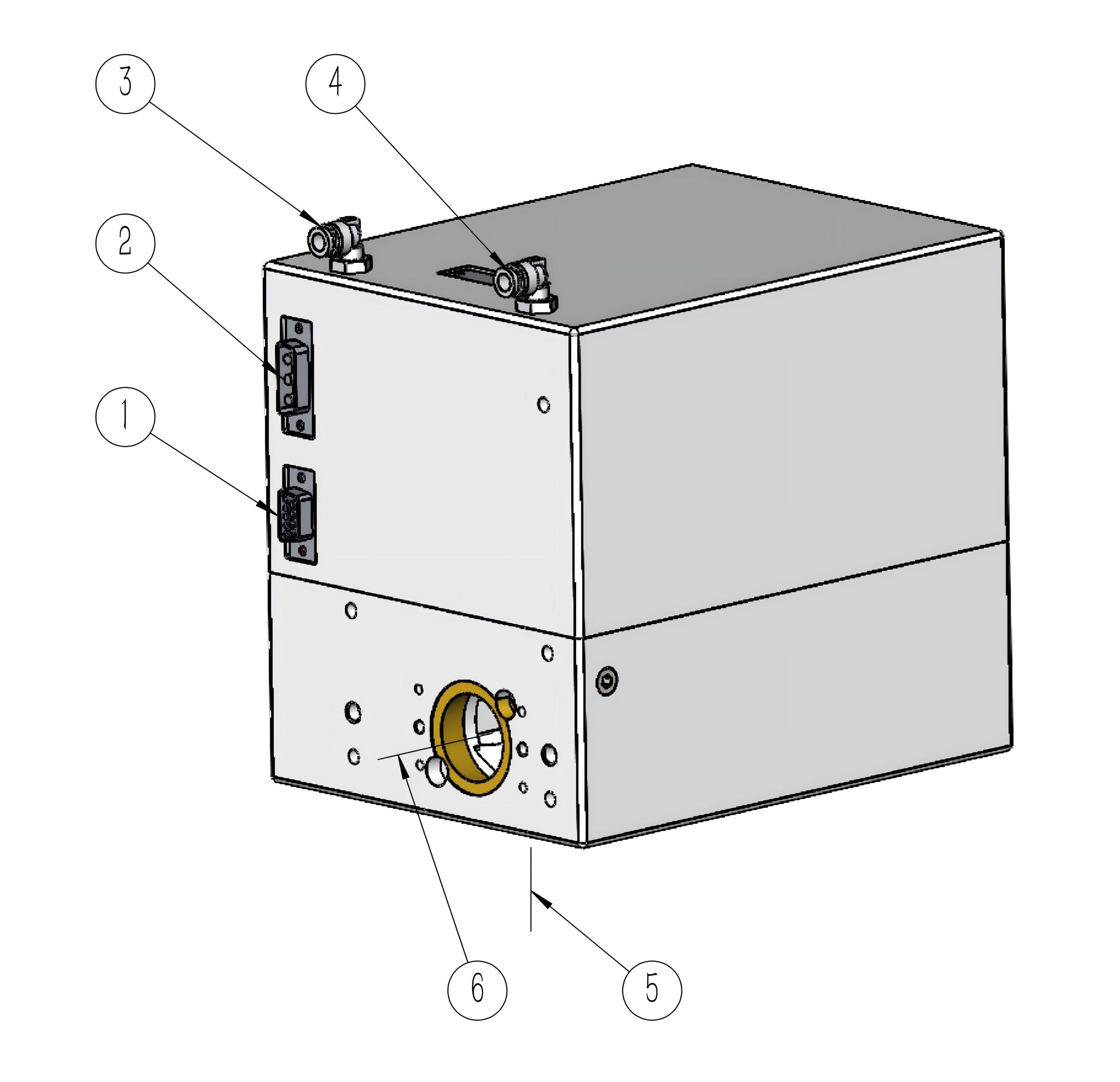 | Legend:1.Electrical Interface (PRS422) 2.Power Input 3.Water Cooling Inlet 4.Water Cooling Outlet 5.Laser Outlet 6.Laser Inlet |
| PSH30AW-3D | |
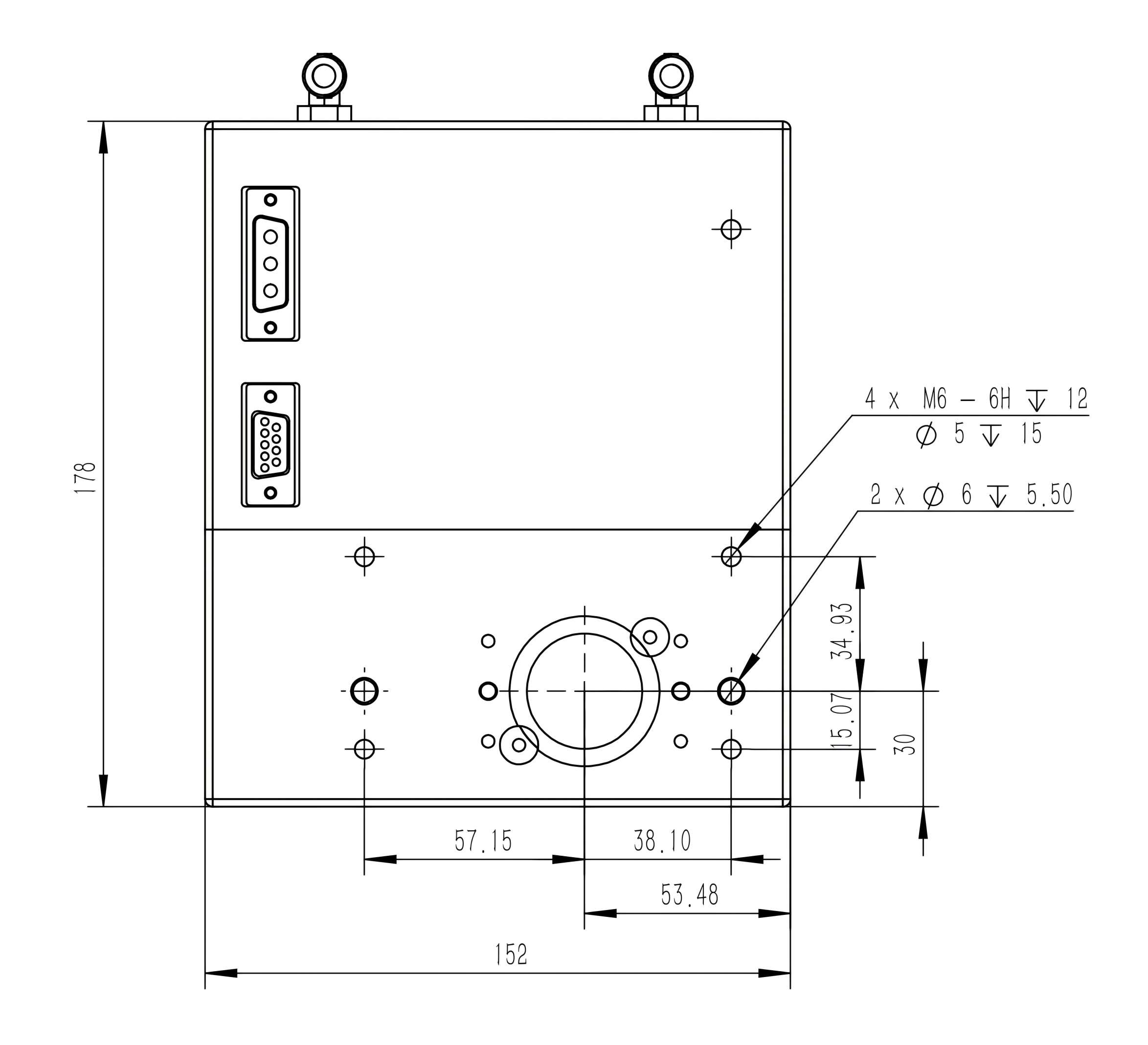 | 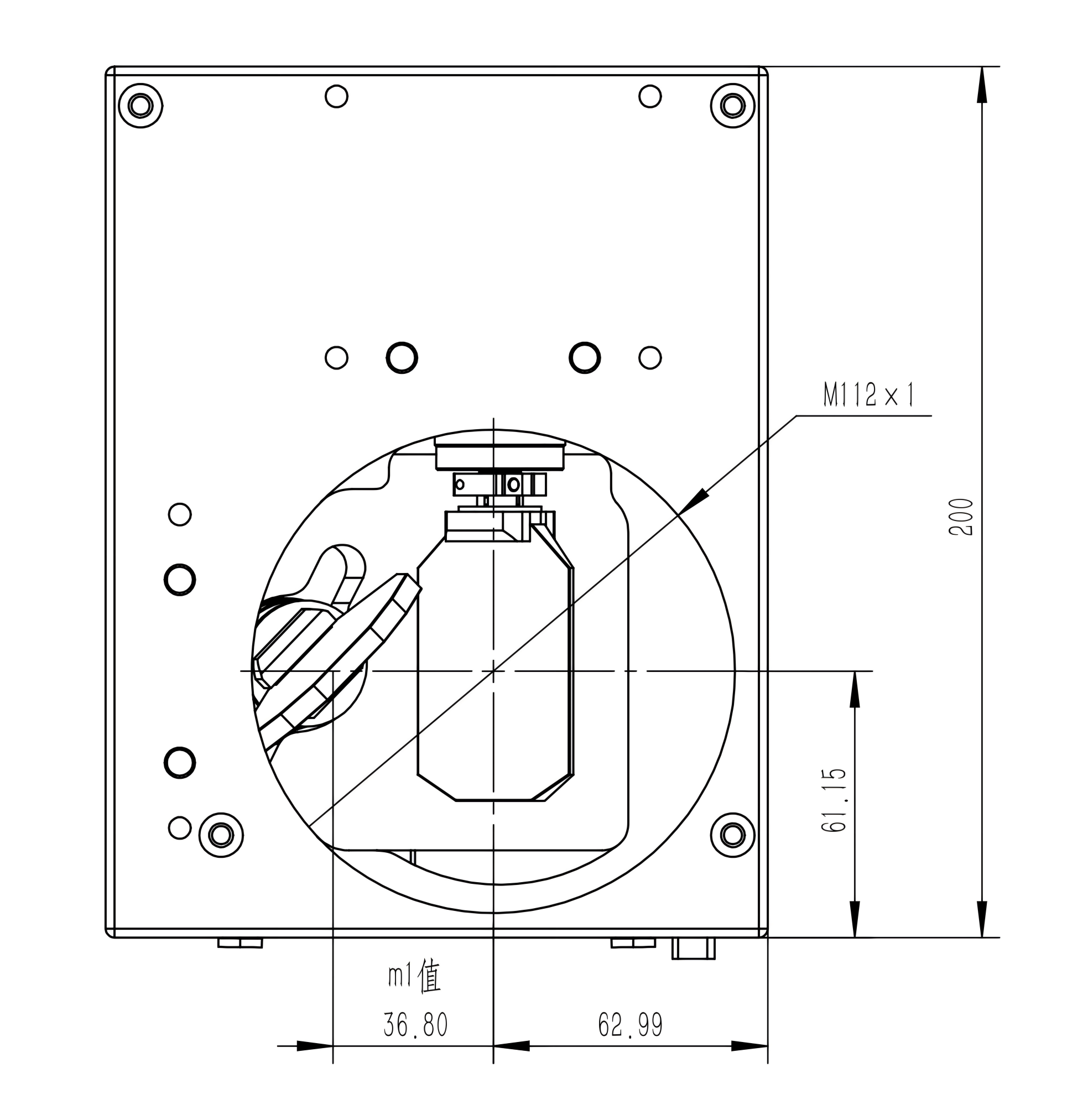 |
| Input Plate & Mounting Plate | Output Plate |
Specifications
PSH30AW-3D | Specifications |
Maximum allowed average laser power(1) | 1000 W |
Cooling | Water |
Aperture | 30 mm |
Effective scan angle(2) | ± 10° |
Tracking error | ≤0.36ms |
Step response | ≤0.9 ms |
Speed | |
Positioning / Jump(3) | <15 m/s |
Line scan(3) | <15 m/s |
Vector scan(4) | <1.5 m/s |
Good writing quality(3)(5) | 350 cps |
Precision | |
Linearity | 99.9% |
Repeatability | 2 μrad |
Temperature drift | |
Offset | 15 μrad/℃ |
Gain | 15 μrad/℃ |
Long time drift(after 30 mins warm up) | |
Over 8 hours long-term offset drift | 25 μrad |
Over 8 hours long-term gain drift | 40 μrad |
Operating temperature range | 25 ℃ ± 10 ℃ |
Signal interface | Analog:± 10 V or ± 5 V |
Digital:XY2-100 or PRS422 | |
Input power requirement(DC) | ± 15 V @ 5 A Max RMS |
Volume | 152mm×206.9mm×180mm |
Note:
(1) For laser wavelength 1030-1090 nm.
(2) All angles are in mechanical degrees.
(3) With F-Theta objective f = 160 mm. Speed value varies correspondingly with different focal lengths.
(4) Reapeatibility and temperature drift are measured within this speed.
(5) Single-stroke font with 1 mm height.
(6) Long-term temperature drift is given under an ambient temperature environment of 25°C. and a working load under 500W. Temperature drift testing with high laser power is strictly prohibited. High laser power could induce thermal deformations in both the optical and mechanical systems, making it impossible to differentiate whether the drift is originating from galvanometer scanner itself or due to deformations in the optical and mechanical systems.