

The PS10000W scanning welding system consists of collimator, galvanometer scanner, F-theta lens, interface control card, air knife and other components. It offers an all-in-one integrated solution with stable performance specifications.
Sealing & Safety:It adopts a well-engineered structure featuring outstanding sealing performance and reliable safety design.
Easy Installation:Integrated monolithic construction enables fast and convenient installation.
Application Fields
The PS10000W scanning welding system is widely applied in laser welding, laser cutting, laser cleaning and other processing fields.
Mechanical Drawing(Unit of dimension: mm)
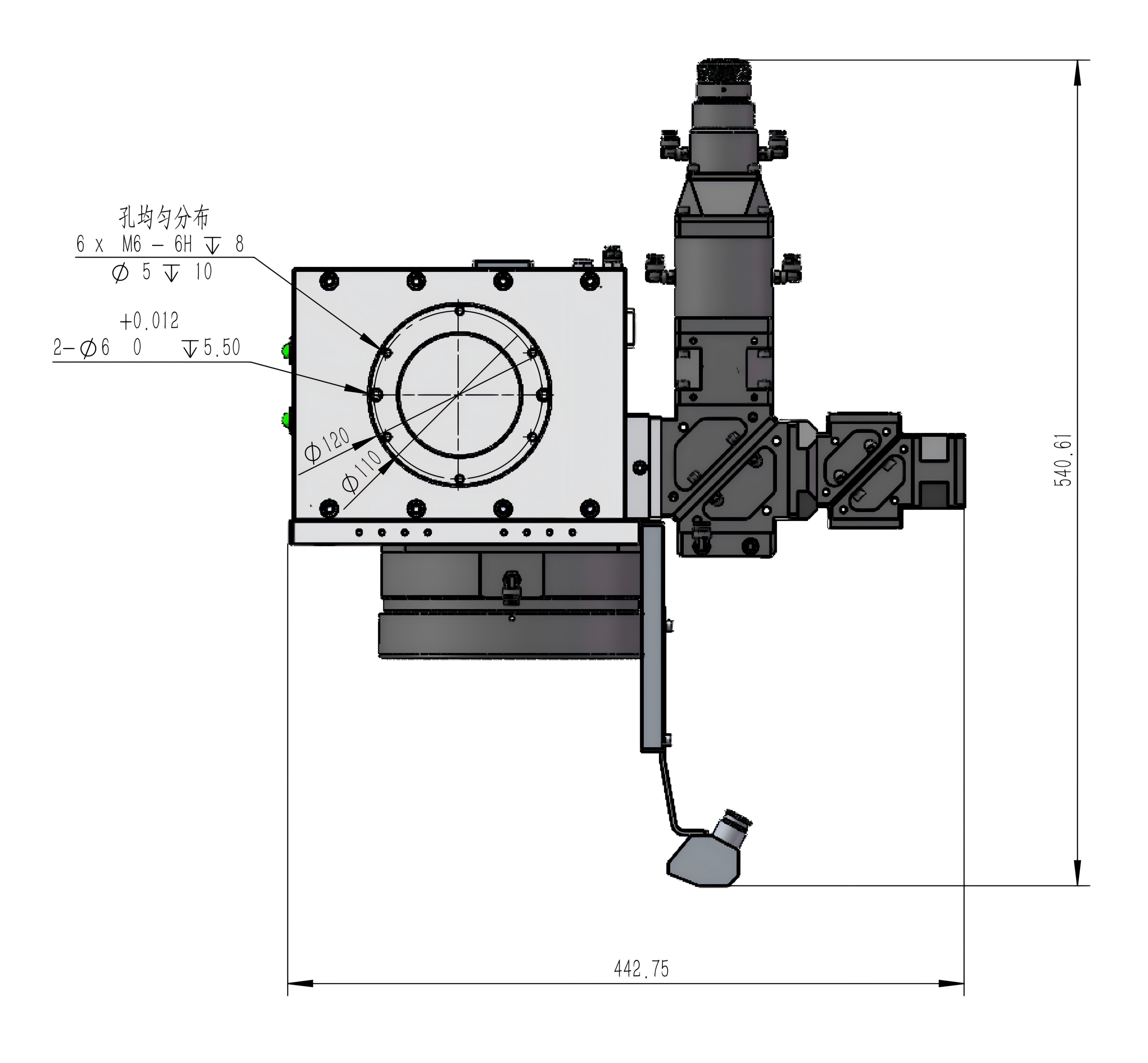 | 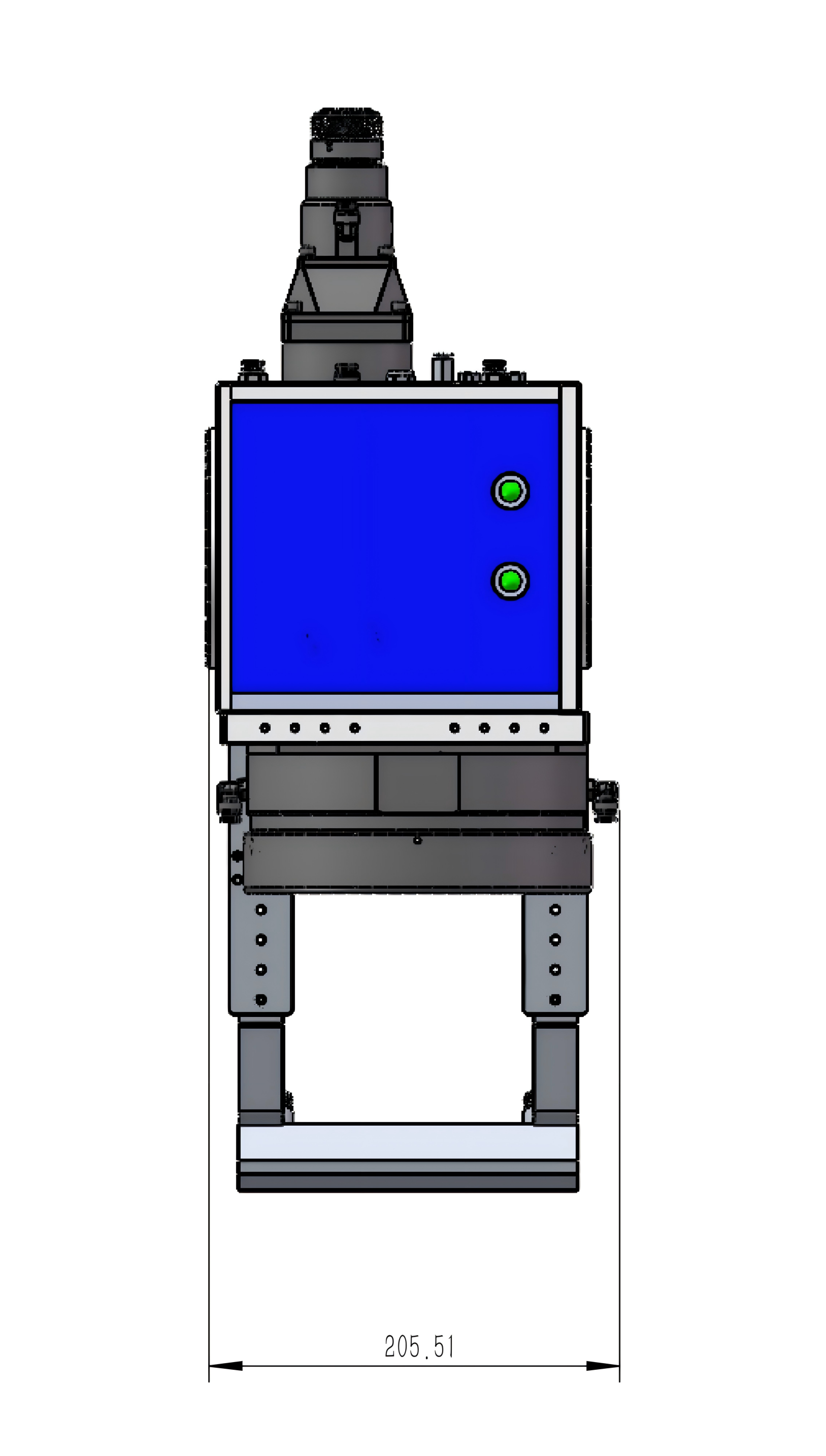 |
Specifications
PS8000W | Specifications |
Maximum allowed average laser power(1) | 10000 W |
Cooling | Water+Air |
Aperture | 30 mm |
Effective scan angle(2) | ± 10° |
Tracking error | ≤0.5 ms |
Step response (1% of full scale) | ≤1.1 ms |
Speed | |
Positioning / Jump(3) | <14.5 m/s |
Line scan(3) | <14.5 m/s |
Vector scan(4) | <1.8 m/s |
Precision | |
Linearity | 99.9 % |
Repeatability | 2 μrad |
Temperature drift | |
Offset | 20 μrad/℃ |
Gain | 20 μrad/℃ |
Long time drift(after 30 mins warm up)(5) | |
Over 8 hours long-term offset drift | 40 μrad |
Over 8 hours long-term gain drift | 80 μrad |
Operating temperature range | 25 ℃ ± 10 ℃ |
Signal interface | Analog:± 10 V or ± 5 V |
Digital:XY2-100 or PRS422 | |
Input power requirement(DC) | ± 15 V @ 10 A Max RMS |
Note:
(1) For laser wavelength 1030-1090 nm.
(2) All angles are in mechanical degrees.
(3) With F-Theta objective f = 348 mm. Speed value varies correspondingly with different focal lengths.
(4) Reapeatibility and temperature drift are measured within this speed.
(5) Long-term temperature drift is given under an ambient temperature environment of 25°C. and a working load under 500W. Temperature drift testing with high laser power is strictly prohibited. High laser power could induce thermal deformations in both the optical and mechanical systems, making it impossible to differentiate whether the drift is originating from galvanometer scanner itself or due to deformations in the optical and mechanical systems.